
Bali Eco-Stay: How to Travel More Sustainably Without Giving Up Comfort
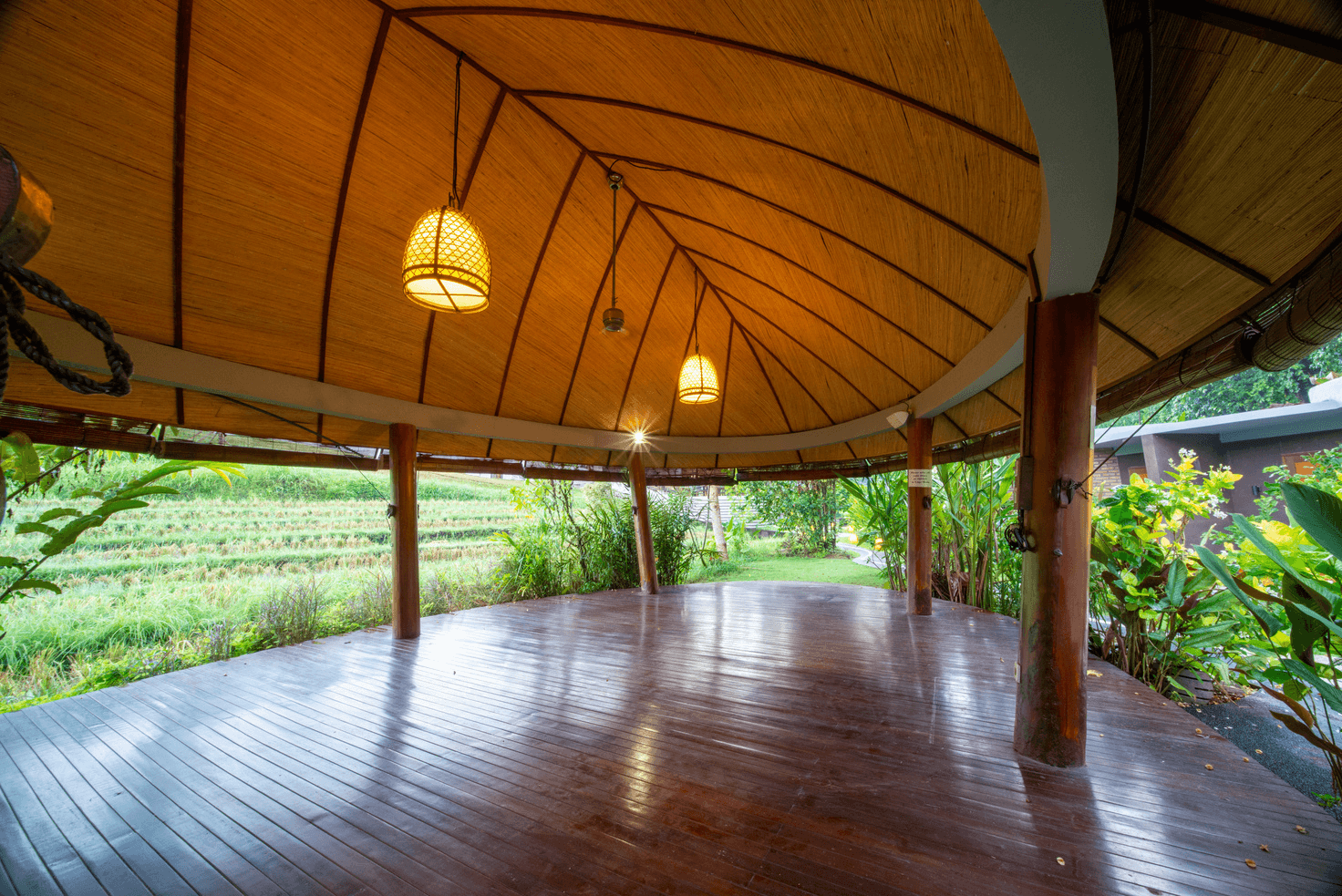
What does it really mean to choose a Bali eco-stay and travel more sustainably on the island?
For many travelers, a Bali eco-stay is no longer simply about choosing a hotel with a few green features. It is about staying somewhere that feels connected to its surroundings, uses resources thoughtfully, reduces unnecessary waste, and supports the place you have come to experience.
That matters especially in Bali. The island’s natural beauty is part of what draws people here, but tourism also places pressure on water, waste systems, landscapes, and local communities. Choosing a more responsible place to stay is one small way to make your visit lighter on the island — without giving up the comfort, privacy, or sense of escape that makes a holiday feel special.
At De Moksha, sustainability is approached in much the same way as wellness: not as a single feature, but as a collection of thoughtful choices woven into the guest experience. The aim is to combine the comfort people expect from luxury accommodation in Bali with a lighter, more nature-conscious way of staying.
What Makes a Genuine Bali Eco-Stay Different?
The best eco-stays do more than look natural. Bamboo, tropical gardens, and rice-field views can create a beautiful atmosphere, but genuine sustainability is found in how a property operates day to day.
That can include reducing single-use plastics, choosing biodegradable guest amenities, sourcing food locally where possible, designing buildings around the existing landscape, conserving water and energy, and creating experiences that connect guests with local culture rather than separating them from it.
In other words, an eco-stay should help you enjoy Bali while reducing some of the impact that comes with being here.
1. Reducing Plastic Before It Becomes Waste
Single-use plastic is convenient for a few minutes and can remain in the environment for far longer. For hotels and resorts, where toiletries, water, food service, and housekeeping can generate large quantities of disposable packaging, reducing plastic at the source is one of the most practical sustainability measures.
De Moksha avoids single-use plastics across the resort wherever possible. It is a simple principle: if an item can be eliminated, replaced, refilled, or reused, there is less waste to manage afterwards.
For travelers choosing an eco-friendly stay in Bali, this is a useful question to ask. Sustainability is often easier to understand through everyday details than through broad environmental claims.
2. Biodegradable Amenities That Are Kinder to Water
What goes down a shower or sink matters too. Shampoo, soap, conditioner, and other guest amenities eventually enter wastewater systems, which is why the ingredients used in hospitality products deserve attention.
At De Moksha, guest amenities are biodegradable, helping reduce the impact of the products that enter the water system. It is a small detail from the guest’s perspective, but repeated across every stay it becomes a meaningful part of more responsible resort operations.
When comparing eco-stays, look beyond whether amenities are presented in attractive dispensers. Consider both the packaging and what is actually inside.
3. Architecture That Belongs to the Landscape
One of the most appealing things about an eco-stay is the feeling that the property belongs where it was built. Rather than treating nature as a backdrop, thoughtful architecture works with the landscape — its contours, vegetation, views, light, airflow, and climate.
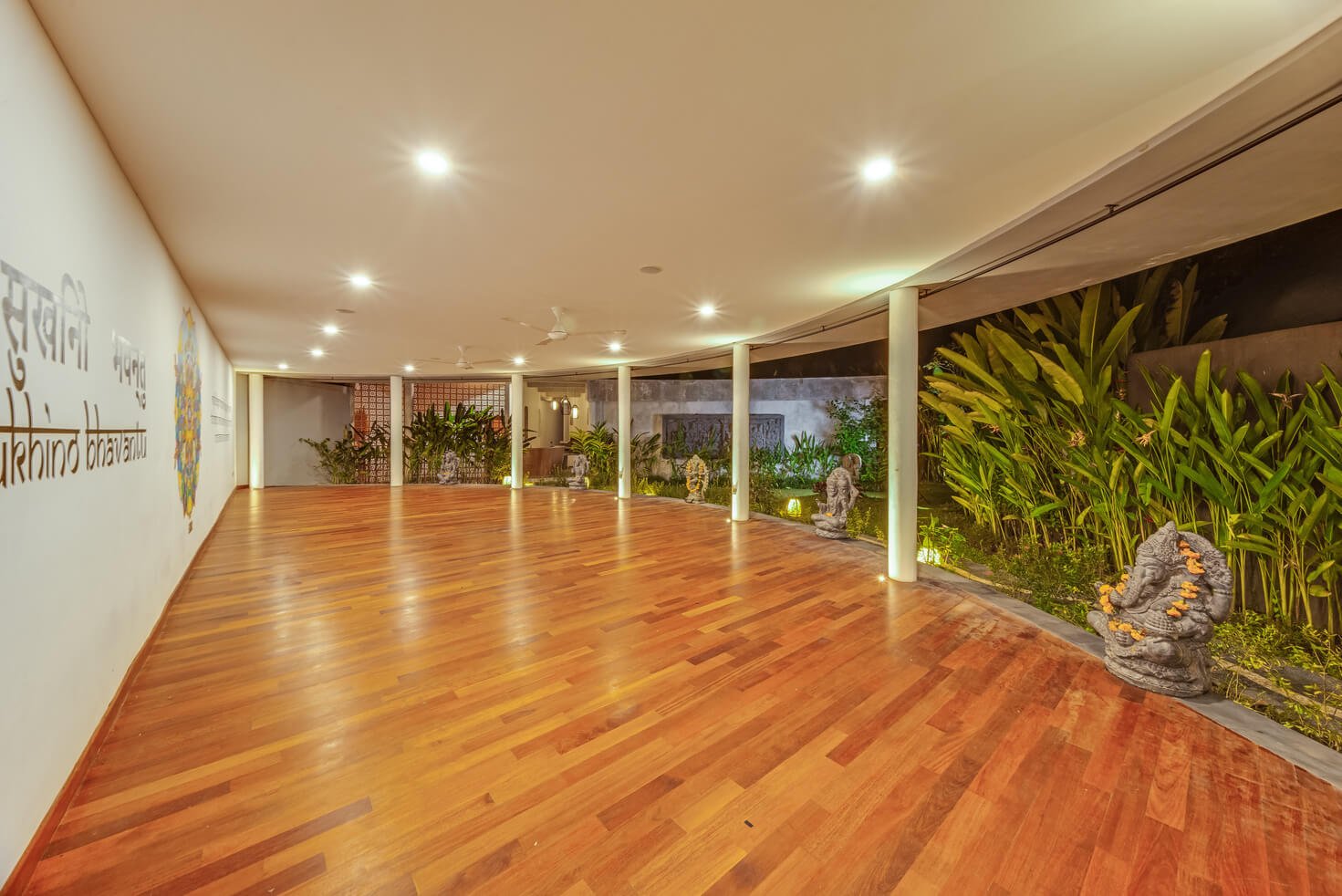
De Moksha’s architecture is designed to integrate into its natural surroundings, with villas and shared spaces set among tropical greenery, rice fields, and the river landscape. The result is not only visually calmer; it also keeps the experience of nature present throughout the stay — an important quality for travelers looking for a nature retreat in Bali.
This relationship between design and setting is part of what separates an eco-conscious boutique resort from a conventional hotel transplanted into a tropical location.
Explore De Moksha’s eco-friendly villas and accommodation to see how the resort’s spaces sit within the surrounding landscape.
4. Local Food, Shorter Journeys, and a Stronger Sense of Place
Sustainable travel also reaches the dining table. Choosing local ingredients can reduce the distance food travels while supporting nearby producers and keeping menus connected to the destination.
At De Moksha’s Swarga Rasa Ristorante, meals are prepared fresh using carefully selected local ingredients, with Indonesian and Balinese flavors alongside Italian-inspired dishes. For guests, this makes dining part of the experience of being in Bali rather than something separate from it.
You can explore more about De Moksha’s approach to food and wellness through the Wellness experience.
5. Sustainability Is Also About How You Experience Bali
An eco-stay is not only about what happens inside the resort. Responsible travel also means building a more meaningful relationship with the destination itself.
Instead of rushing from one attraction to another, slower experiences — walking through rice fields, learning about Balinese traditions, joining a local cultural activity, practicing yoga, or simply spending an afternoon surrounded by nature — can create a deeper connection with the island while placing less emphasis on constant consumption.
This slower rhythm also overlaps naturally with wellness. When a stay gives you space to rest, move, eat well, and spend time outdoors, sustainability stops feeling like a list of restrictions and starts to feel like a better way to travel.
If that slower approach is what you are looking for, read our guide to retreats in Bali or explore the De Moksha Yoga & Wellness Center.
How to Choose a Genuine Eco-Stay in Bali
Not every property using the word “eco” operates in the same way. Before booking, look for practical evidence rather than labels alone. Useful questions include:
Does the property actively reduce or eliminate single-use plastics?
Are toiletries and cleaning or guest products chosen with their environmental impact in mind?
Does the architecture respond to the natural setting rather than overwhelm it?
Are local ingredients, producers, craftspeople, or communities part of the operation?
Are guests encouraged to engage respectfully with local culture and nature?
Does the property explain its sustainability practices clearly and specifically?
No resort is impact-free. A more credible approach is to be transparent about the choices being made, keep improving them, and make sustainability part of everyday operations rather than a marketing label.
Eco-Conscious Does Not Have to Mean Basic
There is still a lingering idea that sustainable travel requires giving something up: comfort, privacy, good food, beautiful design, or the little details that make a holiday restorative.
It does not have to.
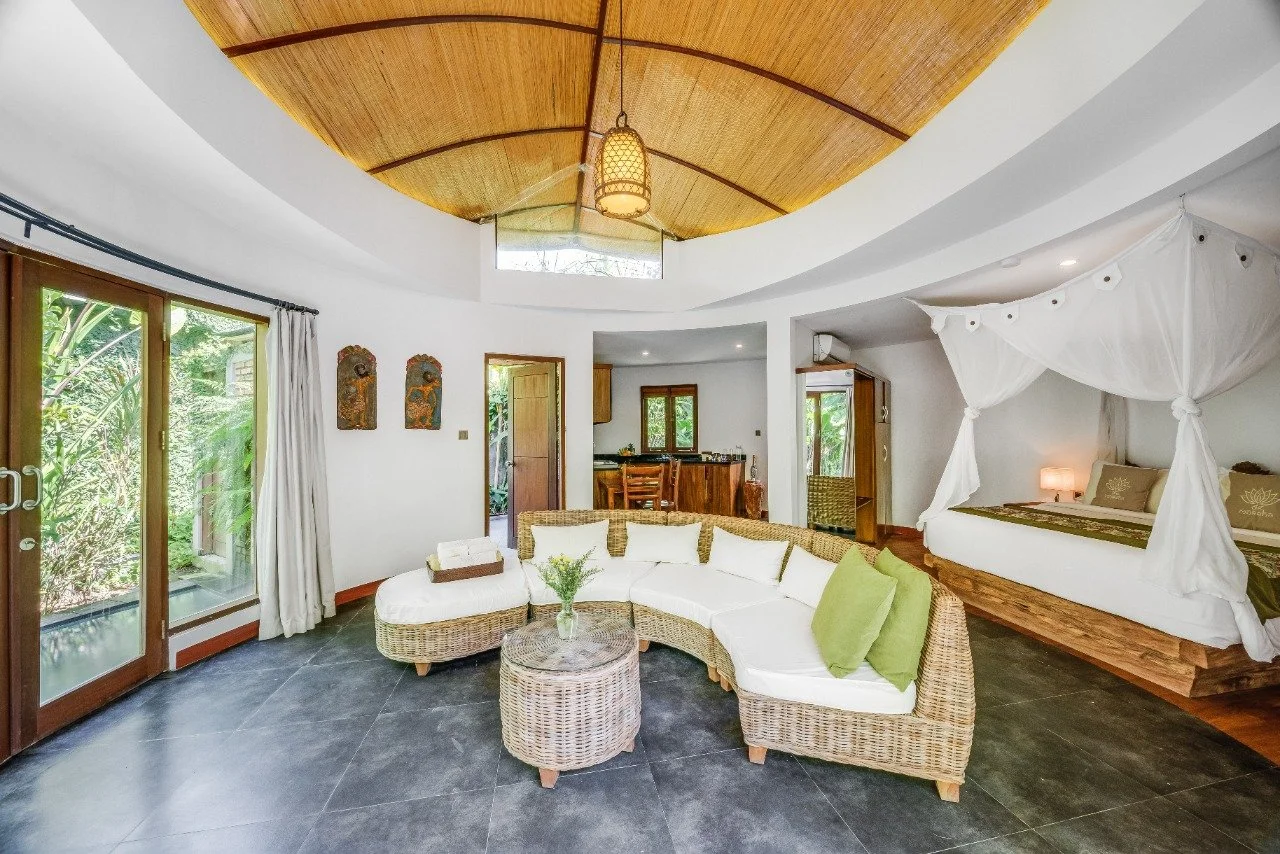
A thoughtful Bali eco-stay can offer private villas, pools, wellness treatments, nourishing food, yoga, and attentive hospitality while making more considered choices behind the scenes. Eco-friendly boutique villas with private pools can still feel indulgent; some of the qualities people associate with boutique luxury — space, quiet, craftsmanship, nature, personalization, and fewer disposable conveniences — fit naturally with a more sustainable way of traveling.
At De Moksha, that balance is central to the experience: comfort without unnecessary excess, wellness connected to nature, and hospitality that feels rooted in Bali. For guests considering a yoga retreat in Bali or one of the island’s wellness retreats, the setting can be as important as the program itself.
For a more structured reset, De Moksha also offers retreats in Bali, including yoga, meditation, nature and healing-focused experiences. Retreat leaders looking for a retreat venue in Bali can also explore De Moksha’s dedicated spaces and group facilities.
A Lighter Way to Experience Bali
Choosing an eco-stay will not solve every environmental challenge facing Bali, but travel is made up of choices. Where you sleep, what you use, what you eat, and how you spend your time all contribute to the footprint of a trip.
The most rewarding sustainable stays make those choices feel natural. You notice the landscape more. You consume a little less. You experience more of the place you came to see. And ideally, you leave feeling that your holiday gave something back to you without taking more than necessary from the destination.
If you are planning a more mindful stay in Bali, explore De Moksha Eco-Friendly Boutique Resort, discover our wellness offerings, or continue reading the De Moksha blog for more ideas on wellness, retreats, and conscious travel.
Frequently Asked Questions About Bali Eco-Stays
-
A Bali eco-stay is accommodation that aims to reduce its environmental impact through practical measures such as reducing waste and single-use plastics, choosing lower-impact amenities, sourcing locally, conserving resources, and designing or operating in closer harmony with the surrounding environment.
-
Yes. Sustainability and comfort are not opposites. Boutique eco-resorts can offer private villas, pools, spa and wellness experiences, high-quality dining, and personalized service while reducing unnecessary waste and making more responsible operational choices.
-
Look for specific practices rather than broad claims. Plastic reduction, biodegradable amenities, locally sourced food, thoughtful architecture, water and energy awareness, and meaningful connections with local culture are all useful indicators.
-
De Moksha avoids single-use plastics across the resort, uses biodegradable guest amenities to reduce water pollution, and uses architecture designed to integrate with the surrounding landscape. Its hospitality experience also emphasizes local ingredients, nature, wellness, and connection with Balinese culture.
-
Often, yes. Eco-conscious stays tend to place greater emphasis on nature, slower travel, nourishing food, outdoor spaces, and mindful experiences — all of which complement yoga, meditation, spa treatments, and wellness retreats.
-
De Moksha is in Tabanan Regency, near Tanah Lot, surrounded by rice fields, tropical greenery, and traditional Balinese village life. Its setting offers a quieter alternative to Bali’s busiest tourism areas while remaining connected to the island’s culture and natural landscape.