
How to Choose the Right Retreat Venue in Bali
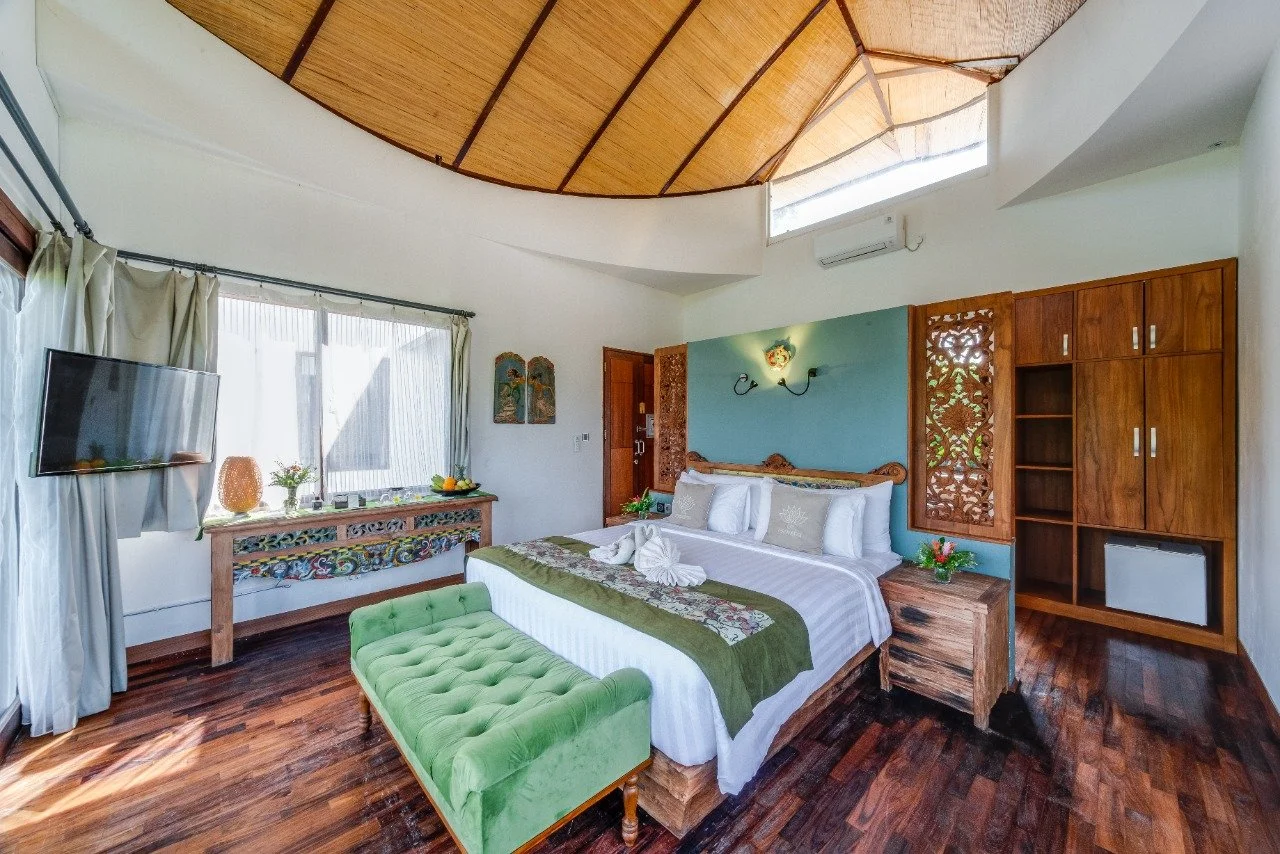
A beautiful villa is not automatically a good retreat venue.
When you are organizing a retreat, the setting matters, but so do dozens of less glamorous details: where the morning session will happen if it rains, whether the kitchen can manage different dietary requirements, how far guests need to walk between their rooms and the practice space, and who will help when the schedule changes at the last minute.
The right retreat venue in Bali should make your job easier, not give you another operation to manage.
At De Moksha, we see a retreat venue as more than accommodation and a yoga shala. Our team works with retreat leaders on the practical pieces around the program - from dedicated practice and workshop spaces to group dining, wellness experiences, cultural activities and on-site support - while the facilitator remains focused on the experience they want to create.
So before you choose a venue because the photographs look beautiful, here are the questions worth asking.
1. Start With the Retreat You Want to Create
Before comparing venues, define the experience first.
A six-person creative retreat needs something different from a 30-person yoga program. A leadership retreat may need air-conditioned workshop space and reliable presentation arrangements, while a meditation retreat may care more about quiet surroundings and places for participants to spend time alone.
Write down your non-negotiables: expected group size, number of nights, room configuration, daily practice requirements, meal format, workshop needs, wellness activities, excursions and the amount of free time you want guests to have.
Once you know the shape of the retreat, it becomes much easier to tell whether a venue genuinely fits it.
2. Check the Practice and Workshop Spaces - Not Just the Bedrooms
For a retreat leader, the main practice space can be just as important as the accommodation.
Ask how many dedicated spaces are available, how many people each one can comfortably hold, whether they are open-air or enclosed, and what happens during heavy rain or hot afternoons.
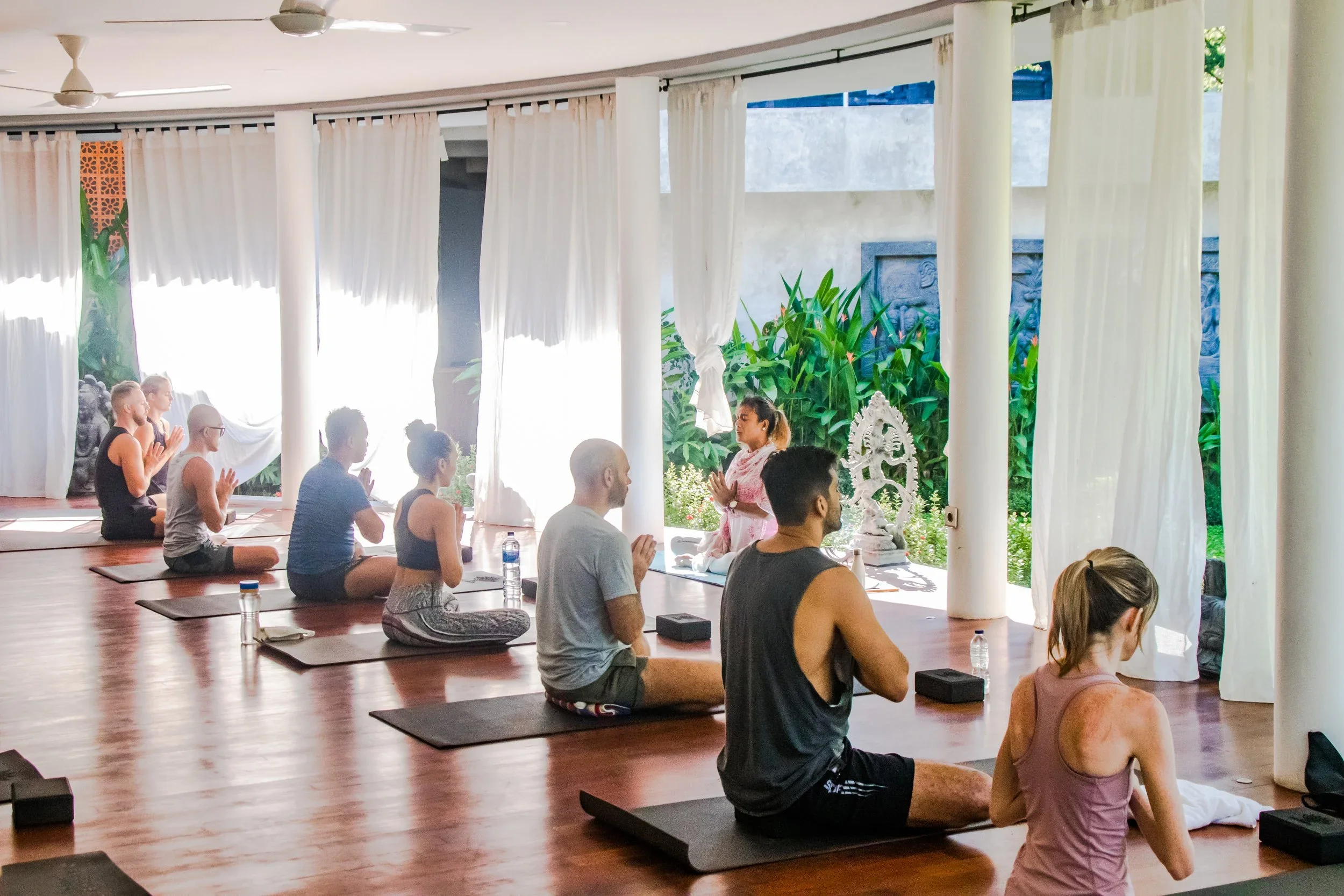
De Moksha has three dedicated yoga and workshop spaces, ranging from an air-conditioned shala to an open-air rice-field pavilion. The spaces can support intimate groups as well as larger programs of up to around 40 participants, depending on the setup.
That flexibility is useful when a retreat includes different formats across the day - perhaps yoga in the morning, a coaching workshop after lunch and meditation in the evening.
See De Moksha's current retreat venue facilities.
3. Think About Accommodation as Part of the Guest Experience
Your guests will spend a significant amount of time outside the programmed sessions.
Look at whether the accommodation gives them enough privacy and comfort to rest between activities. Check room configurations carefully: can solo guests have private accommodation? Are there options for participants who want to share? Are there premium options for guests who want more privacy?
At De Moksha, boutique villa accommodation sits within the same resort environment as the yoga and wellness facilities. Depending on the program and availability, guests can stay in different villa categories, including private-pool options.
Keeping accommodation and core retreat activities within one environment can also reduce unnecessary movement and make the daily schedule easier for both participants and organizers.
Explore the De Moksha villas.
4. Ask How the Venue Handles Food and Dietary Requirements
Food can become one of the most complicated parts of organizing a group retreat.
Do not wait until guests arrive to discover that the venue cannot comfortably accommodate the mix of diets in your group. Ask how menus are planned, whether meals can be served together, how allergies are communicated to the kitchen and what dietary requirements can realistically be supported.
At De Moksha, the culinary team works with retreat organizers on group dining and regularly accommodates requirements including vegetarian, vegan, gluten-free and dairy-free diets as well as allergies and sensitivities.
A good retreat venue should be able to discuss the menu with you before arrival rather than leaving food arrangements until the program has already started.
5. Look for a Venue That Can Support You, Not Replace You
A retreat leader should remain the person shaping the program.
At the same time, you should not need to personally coordinate every meal, room question, activity and operational detail.
Ask the venue who your point of contact will be and what kind of support is available before and during the retreat. Can the team help build an itinerary? Coordinate activities? Manage dietary information? Assist when the schedule changes?
De Moksha positions its retreat team as a partner to facilitators, supporting planning and on-site logistics while allowing the retreat leader to remain responsible for the purpose, content and direction of the program.
That distinction matters: you lead the retreat; the venue should help the retreat run smoothly.
6. Find Out What Wellness Support Is Already On Site
You may not want to bring every practitioner with you.
If yoga, meditation or wellness activities are part of the program, ask what resources already exist at the venue and whether they can be integrated into your schedule.
De Moksha has an in-house yoga teacher who can support retreat programs with guided yoga, meditation and related wellness practices. The resort also has an in-house spa, allowing organizers to build treatments into the itinerary or offer them as optional additions for guests.
For a facilitator, having these services on site can make the program easier to build without turning every activity into an external excursion.
Learn more about the De Moksha Yoga & Wellness Center and wellness experiences.
7. Make Sure There Is Enough Space to Do Nothing
One of the easiest mistakes in retreat planning is filling every hour.
Guests need somewhere to go when they are not in a session. That might be their villa, a pool, a garden, a quiet corner, or simply somewhere outdoors where they do not feel they need to participate in anything.
De Moksha is set among tropical gardens, rice fields and traditional Balinese village surroundings in Tabanan near Tanah Lot. The environment gives organizers the option to create a program with deliberate gaps rather than treating downtime as unused space.
A good retreat schedule has rhythm: activity, rest, connection and personal time.
8. Let Bali Be Part of the Retreat
If your guests have traveled to Bali, the destination should feel like more than a backdrop.
Ask whether the venue can help you incorporate local experiences respectfully and practically. Depending on your retreat, that could mean a village walk, temple visit, Balinese cooking, traditional offering making, dance, rice-field experiences or a purification ceremony.
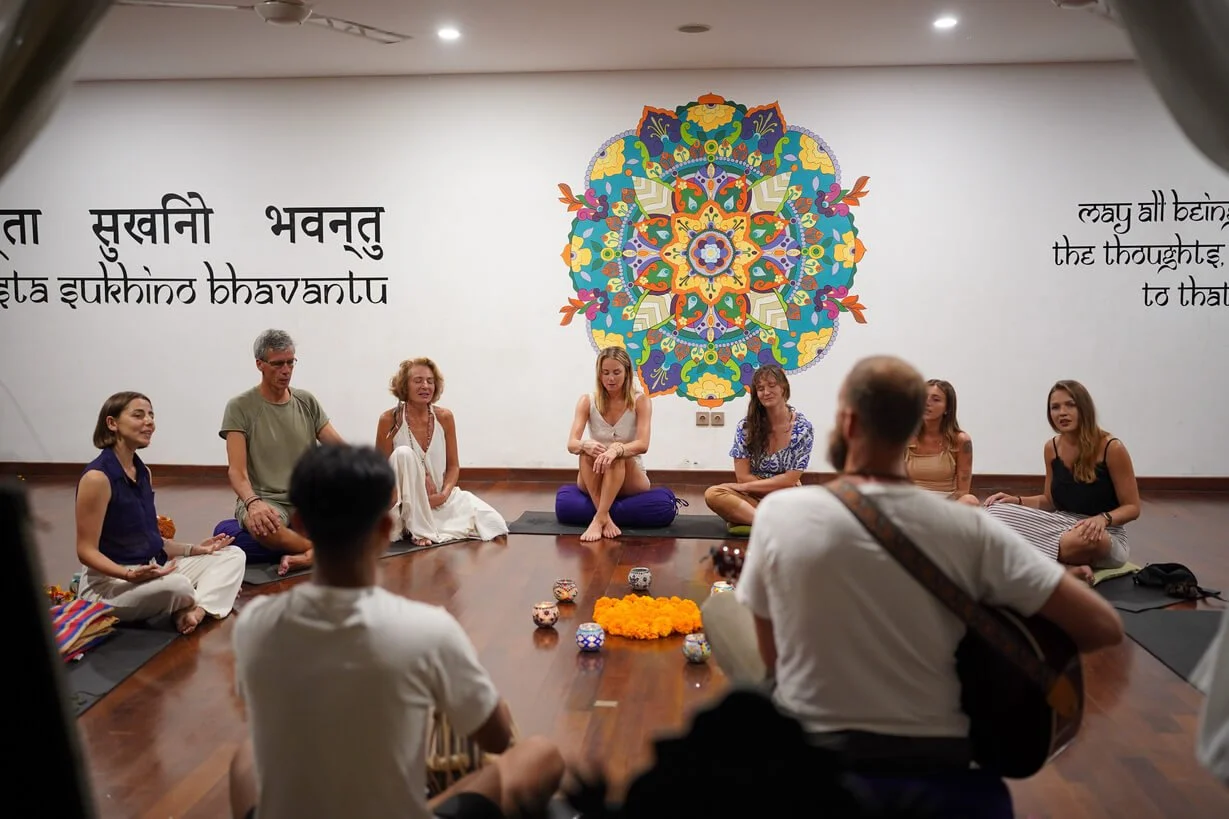
De Moksha can coordinate a range of Balinese cultural and nature experiences for retreat groups. These can be included selectively rather than filling the itinerary simply because they are available.
The strongest programs usually choose experiences that support the retreat's purpose and give guests a meaningful connection with the place.
See examples of how De Moksha combines yoga, meditation and Balinese culture.
9. Consider Sustainability Beyond the Marketing Language
Many Bali properties describe themselves as eco-friendly, so it is worth asking what that actually means in practice.
At De Moksha, sustainability is reflected in choices such as avoiding single-use plastics, using biodegradable guest amenities to reduce water pollution, and designing the resort so the architecture sits within the surrounding landscape rather than feeling disconnected from it.
For retreat organizers, this can be particularly relevant when the values of the venue need to align with the values being communicated to participants.
You do not need a perfect sustainability story. You do need enough transparency to understand what the venue is actually doing.
10. Think Through Logistics Before You Confirm
A retreat can feel effortless to the guest only because somebody has thought through the details beforehand.
Before signing an agreement, map out arrival and departure, room allocation, luggage, meal times, session transitions, equipment, excursions, spa bookings and any outside practitioners or facilitators.
Ask what the venue coordinates directly and what remains your responsibility. If you are arranging transfers, specialist teachers or external excursions, confirm how these fit with the venue's operations.
This is also the moment to discuss contingency plans. What happens if it rains during an outdoor session? Can meal times move? Is there another room available if the program changes?
A venue that asks you these questions early is usually easier to work with once the retreat begins.
11. Visit the Venue If You Can
Photography is useful, but retreat planning is spatial.
If possible, walk through the venue as though you were one of your guests. Start at the room, walk to breakfast, continue to the practice space, imagine the group moving to lunch, and look at where people might spend their free time.
Listen to the surroundings. Check the distance between spaces. Stand in the shala at the time of day you expect to use it. Ask where equipment will be stored and where your team can meet privately.
If an in-person visit is not possible, ask for a detailed video walkthrough and discuss your proposed schedule with the venue team.
12. Compare Value, Not Just the Room Rate
The cheapest accommodation quote is not necessarily the least expensive retreat to operate.
A venue that already has suitable practice spaces, dining, wellness facilities and local activity support may reduce the number of external suppliers, transfers and separate bookings you need to coordinate.
When comparing venues, calculate the whole program rather than only the nightly accommodation rate. Ask what is included, what is optional and which services carry additional charges.
This also makes it easier to build a clear retreat price for your participants without discovering unexpected operational costs later.
Questions to Ask a Retreat Venue Before You Book
Before confirming a venue, ask for clear answers to the practical questions that will shape your program.
How many retreat guests can stay on site?
What room and villa configurations are available for solo and shared occupancy?
How many dedicated yoga or workshop spaces are available, and what is the comfortable capacity of each?
Is there an indoor or covered alternative if the weather changes?
What yoga, workshop or presentation equipment is available?
Can the kitchen accommodate the dietary requirements of my group?
Can meal times and menus be coordinated around my program?
What wellness practitioners, yoga teachers or spa services are available on site?
Can the venue help organize Balinese cultural experiences or nature activities?
Who will be my operational contact before and during the retreat?
Which logistics can the venue coordinate, and which remain the organizer's responsibility?
What exactly is included in the quotation, and what is charged separately?
Why De Moksha Works as a Retreat Venue in Bali
De Moksha is designed around the idea that a retreat should feel connected: accommodation, practice spaces, food, wellness, nature and Balinese culture working together rather than existing as separate bookings.
For retreat leaders, that means access to three dedicated yoga and workshop spaces, boutique villa accommodation, group dining and dietary planning, an in-house yoga teacher, spa facilities, cultural and nature experiences, and a team that can support planning and on-site logistics.
The resort's Tabanan setting near Tanah Lot also offers something increasingly difficult to find in Bali: a peaceful environment connected to rice fields and village life while still operating as a full-service boutique resort.
Whether you are planning your first retreat or bringing an established program to Bali, the most important question is not whether a venue looks beautiful. It is whether the venue can support the experience you have promised your guests.
That is the conversation worth having before you book.
Explore hosting your retreat at De Moksha and discuss your group, program and venue requirements with the retreat team.
Frequently Asked Questions About Choosing a Retreat Venue in Bali
-
Look beyond the setting. Check accommodation capacity and room configuration, dedicated practice or workshop spaces, weather alternatives, meals and dietary support, wellness facilities, logistics, privacy, downtime areas and the level of support the venue provides to organizers.
-
De Moksha's retreat venue page states that its flexible yoga and workshop spaces can support intimate groups of around 8 through larger groups of up to approximately 40, depending on the activity and layout. Accommodation requirements should be discussed separately with the team because room availability and configuration vary by date.
-
Yes. De Moksha currently offers three dedicated spaces for retreat activities, including an air-conditioned shala and an open-air rice-field pavilion. They can be used for formats such as yoga, meditation, coaching and group workshops.
-
Yes. De Moksha's retreat venue offering includes group dining support and lists vegetarian, vegan, gluten-free and dairy-free requirements as well as food allergies and sensitivities among the needs its culinary team can accommodate. Organizers should provide dietary information in advance so menus can be planned properly.
-
De Moksha has an in-house yoga teacher who can complement a retreat leader's program with yoga, meditation and related wellness practices. The resort also has spa and wellness facilities that can be incorporated into a retreat schedule or offered as optional guest activities.
-
Yes. Depending on the program, De Moksha can coordinate experiences such as temple visits, village and rice-field activities, Balinese cooking, offering-making, cultural performances and purification ceremonies. Organizers can select experiences that fit the purpose and tone of their retreat.
-
No. Its venue offering is designed for a range of group formats, including wellness, meditation, mindfulness, coaching, personal-development, creative, leadership, team-building and corporate wellness retreats, in addition to yoga programs.
-
There is no single rule because availability depends on group size, season, villa requirements and how much customization your program needs. For a multi-day group retreat, it is sensible to start venue discussions early enough to confirm accommodation, practice spaces, menus, activities and logistics before you begin selling or finalizing the program.
-
If possible, yes. A site visit helps you understand distances, noise, room layouts, practice spaces and the overall guest flow. If you cannot visit in person, request a detailed walkthrough and review your proposed daily schedule with the venue team before confirming.