Ayurvedic Retreat Bali: A Gentler Way to Explore Balance, Rest and Wellbeing

Have you ever noticed how difficult it can be to slow down, even when you are on holiday?
You change the scenery, put your work away, and tell yourself it is time to rest — but your mind may still be moving at the same speed.
For travelers looking for a different rhythm, Ayurveda offers an interesting place to begin. Originating in India, Ayurveda is a traditional system of wellbeing that looks at daily routines, food, movement, rest, and the relationship between body and mind as interconnected parts of how we feel.
An Ayurvedic retreat in Bali brings some of these ideas into a setting already associated with yoga, nature, reflection, and slower living. It does not have to mean following a strict program. For many people, it is simply an opportunity to become more attentive to how they eat, move, rest, and spend their time.
What Is Ayurveda?
Ayurveda is a traditional Indian system of medicine and wellbeing with a long history. Its name is commonly translated from Sanskrit as the “knowledge” or “science of life.”
One of Ayurveda’s best-known ideas is the concept of three doshas — Vata, Pitta, and Kapha. Within Ayurvedic tradition, these are used as a framework for understanding different tendencies and for thinking about balance in areas such as routine, food, movement, and rest.
For someone new to Ayurveda, the terminology can sound complicated. It does not need to be. Many of the everyday practices associated with Ayurvedic living are quite simple: eating attentively, creating regular routines, making time for rest, practicing gentle movement, and paying closer attention to how different habits make you feel.
An Ayurvedic retreat can provide time and space to explore those ideas without expecting you to become an expert.
Why Bali and Ayurveda Work So Naturally Together
Ayurveda comes from India, not Bali, so it is important not to blur two distinct traditions.
What makes Bali an appealing setting for exploring Ayurveda is the environment around it. Yoga is widely practiced, tropical nature is never far away, and many wellness stays are built around slower routines, nourishing food, body treatments, meditation, and time outdoors.
Balinese culture also has its own rich traditions surrounding community, ritual, nature, and wellbeing. Experiencing these alongside Ayurvedic-inspired practices can make a retreat feel connected to the destination rather than like a wellness program that could happen anywhere.
At De Moksha, the surrounding rice fields, tropical gardens, river landscape, yoga spaces, spa experiences, and cultural activities create an environment where slowing down feels less like another task on the itinerary.
If you are considering a broader wellness escape, explore our retreats in Bali and wellness experiences.

What Might an Ayurvedic Retreat in Bali Include?
There is no single formula for an Ayurvedic retreat. Some are highly structured and led by qualified Ayurvedic practitioners, while others are wellness retreats that incorporate Ayurvedic-inspired food, workshops, yoga, massage, or daily routines.
Depending on the program, you might encounter yoga and meditation, herbal or oil-based body treatments, discussions about Ayurvedic principles, cooking or self-care workshops, quieter periods for rest, and meals inspired by Ayurvedic traditions.
The important distinction is whether you are looking for a general wellness experience inspired by Ayurveda or individualized Ayurvedic medical care. If you are seeking treatment for a health condition, that should involve an appropriately qualified healthcare or Ayurvedic practitioner rather than relying on a resort wellness program.
Food, Routine and the Pleasure of Eating More Slowly
Food is an important part of Ayurvedic tradition, but it is also one of the simplest ways to change the pace of a retreat.
Instead of treating meals as something squeezed between activities, a slower wellness stay gives you time to sit down, eat without rushing, notice what you are eating, and enjoy ingredients connected to the place you are visiting.
At De Moksha, dining is built around fresh, locally sourced ingredients, with Indonesian and Balinese influences alongside other dishes. Retreat menus can also be adapted around different dietary needs and program intentions.
Rather than promising that a particular menu will “detox” the body or produce a specific health result, we think the more useful idea is simpler: good food, eaten with time and attention, can be an enjoyable part of taking better care of yourself.
Yoga and Ayurveda: Related, but Not the Same
Yoga and Ayurveda share historical roots in India and are often explored together, but they are not interchangeable.
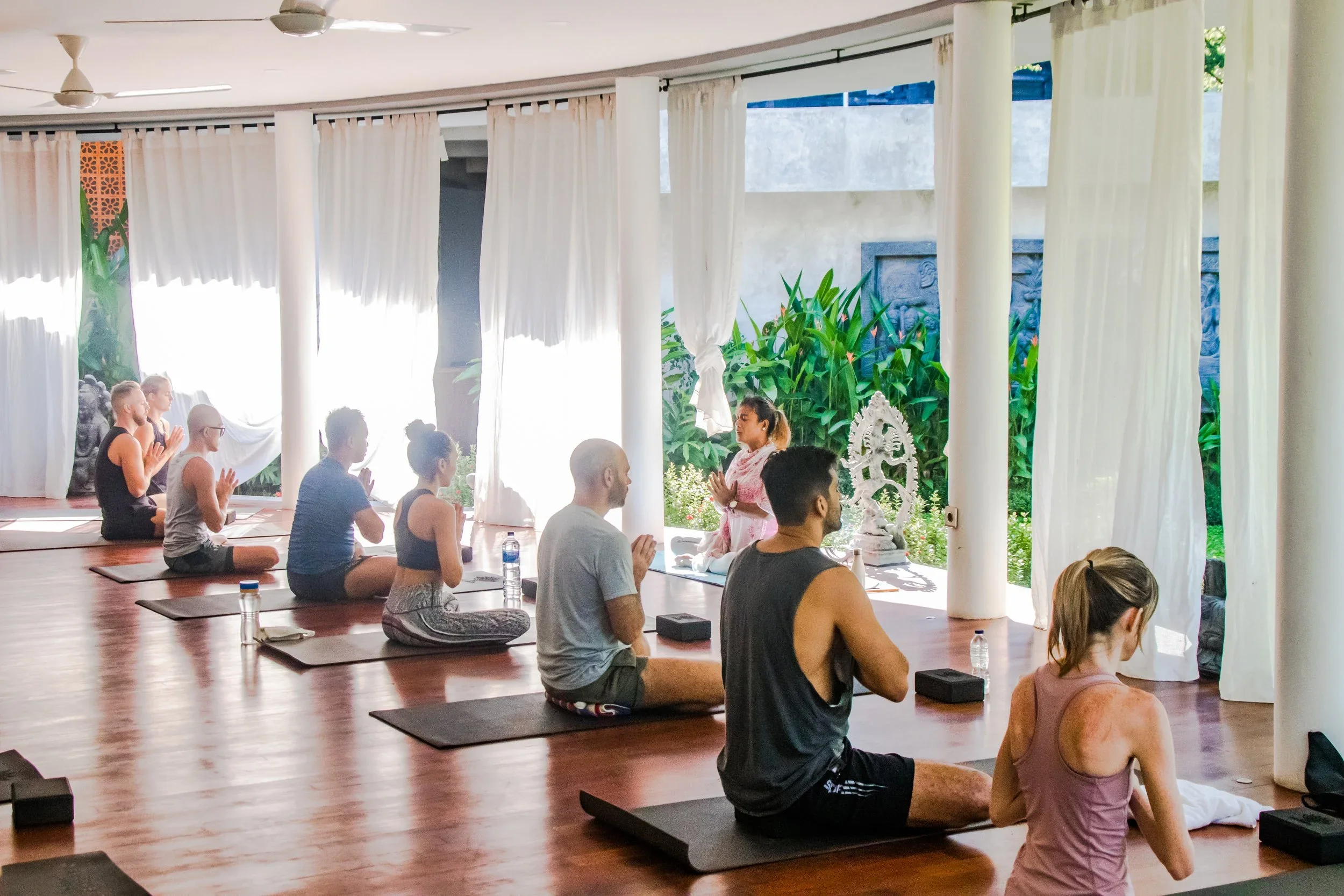
On retreat, yoga can provide a physical and reflective practice alongside the quieter routines associated with Ayurvedic-inspired living. A morning yoga session, for example, can become less about achieving a difficult pose and more about beginning the day with movement and attention.
At De Moksha, guests can include yoga and meditation in their stay, whether they are joining a structured retreat or simply looking for a few quieter practices during their holiday.
You can also explore De Moksha's daily yoga classes and Yoga & Meditation retreat.
A De Moksha Experience: Ayurvedic Beauty Care Making
Sometimes the easiest way to understand a tradition is to experience one small part of it with your own hands.
De Moksha offers an Ayurvedic Beauty Care Making Class where guests can explore the use of herbs, oils, and botanicals while creating natural skincare preparations. The workshop is less about promising a beauty transformation and more about learning, making, and enjoying a slower form of self-care.
It is a good example of how Ayurvedic ideas can become part of a Bali stay without turning the entire holiday into a strict wellness schedule.
The De Moksha wellness page includes the Ayurvedic Beauty Care Making Class and other guest activities.
Wellbeing Can Include Culture, Too
A retreat does not need to happen entirely inside a spa or yoga shala.
One of the pleasures of choosing a wellness retreat in Bali is being able to combine time for yourself with experiences of the island around you. At De Moksha, that might mean learning about Balinese offerings, joining a dance or cooking activity, visiting nearby cultural sites, or spending time walking through the surrounding landscape.
These experiences are not Ayurvedic practices, and we would not present them as such. They belong to Bali. But together with yoga, wellness, nature, and rest, they can create a retreat that feels richer and more connected to place.
Do You Need a Strict Program?
Not everyone wants to wake up to a schedule.
Some travelers enjoy the structure of a multi-day retreat, particularly when they want to remove everyday decisions and give themselves permission to focus on one experience. Others prefer to stay somewhere peaceful and choose yoga, spa treatments, workshops, or quiet time as they go.
Both approaches can be valuable. If you are exploring Ayurveda for the first time, a flexible wellness stay may actually be a comfortable introduction because it allows you to discover which practices interest you without feeling that you have to adopt an entire system at once.

Who Might Enjoy an Ayurvedic-Inspired Retreat?
You do not need previous experience with Ayurveda or yoga.
An Ayurvedic-inspired retreat may appeal to travelers who are curious about traditional wellness practices, people who want a quieter and more intentional holiday, yoga practitioners interested in Ayurveda’s relationship with daily living, or anyone who simply wants more time for nature, nourishing food, movement, and rest.
It is best approached as an opportunity to explore wellbeing rather than as a substitute for medical treatment. If you have a health condition, take medication, are pregnant, or are considering an intensive Ayurvedic treatment or restrictive diet, speak with an appropriate healthcare professional before beginning it.
A Different Kind of Bali Holiday
The most memorable wellness trips are not always the ones where you do the most.
Sometimes the change comes from smaller things: eating breakfast without looking at your phone, moving your body in the morning, spending an afternoon near the rice fields, learning something new, or allowing yourself to go to bed early without feeling that you are missing out.
That is perhaps the most useful way to think about an Ayurvedic retreat in Bali. Not as a promise to fix everything in a few days, but as an invitation to pay closer attention to the routines that shape how you feel.
At De Moksha, Ayurveda can sit alongside yoga, wellness, Balinese culture, nature, and comfortable villa living — giving you the freedom to create a stay that feels restorative without becoming rigid.
For more ideas, read our guide to retreats in Bali or discover how to choose a more sustainable Bali eco-stay.
Frequently Asked Questions About Ayurvedic Retreats in Bali
-
An Ayurvedic retreat is a wellness experience based wholly or partly on Ayurveda, a traditional Indian system of medicine and wellbeing. Programs vary widely and may include education about Ayurvedic principles, yoga, meditation, food, body treatments, workshops, and time for rest. More intensive or individualized Ayurvedic care should be provided by appropriately qualified practitioners.
-
No. You can explore Ayurveda without knowing your dosha in advance. Some programs include a consultation based on Ayurvedic tradition, while more general wellness retreats may simply introduce Ayurvedic ideas through food, routines, yoga, or workshops.
-
No. Ayurveda and yoga are distinct traditions, although they share historical roots in India and are often practiced alongside one another. On a wellness retreat, yoga may complement an Ayurvedic-inspired routine through movement, breathing, meditation, and reflection.
-
There is no single ideal length. A few days can provide an introduction to Ayurvedic-inspired routines and wellness activities, while a longer stay gives you more time to settle into a slower rhythm. If you are considering an intensive or therapeutic Ayurvedic program, the duration should be determined with a suitably qualified practitioner.
-
De Moksha offers an Ayurvedic Beauty Care Making Class where guests work with herbs, oils, and botanicals to create natural skincare preparations. Ayurveda can also be explored alongside De Moksha’s broader yoga, wellness, spa, nature, and retreat experiences.
-
Yes. Many travelers choose to combine Ayurvedic-inspired routines with yoga and meditation. De Moksha offers yoga and meditation experiences that can be incorporated into a flexible stay or a more structured retreat program.
-
Yes, provided you choose a program that matches what you are looking for. Beginners may prefer an introductory wellness retreat with workshops, yoga, food, and self-care practices rather than an intensive therapeutic program.
-
No. A wellness retreat should not replace medical diagnosis or treatment. Anyone with a medical condition, taking medication, pregnant, or considering intensive Ayurvedic treatments or major dietary changes should consult an appropriate healthcare professional.