The Difference Between a Vacation and a Retreat: How to Choose the Right Trip
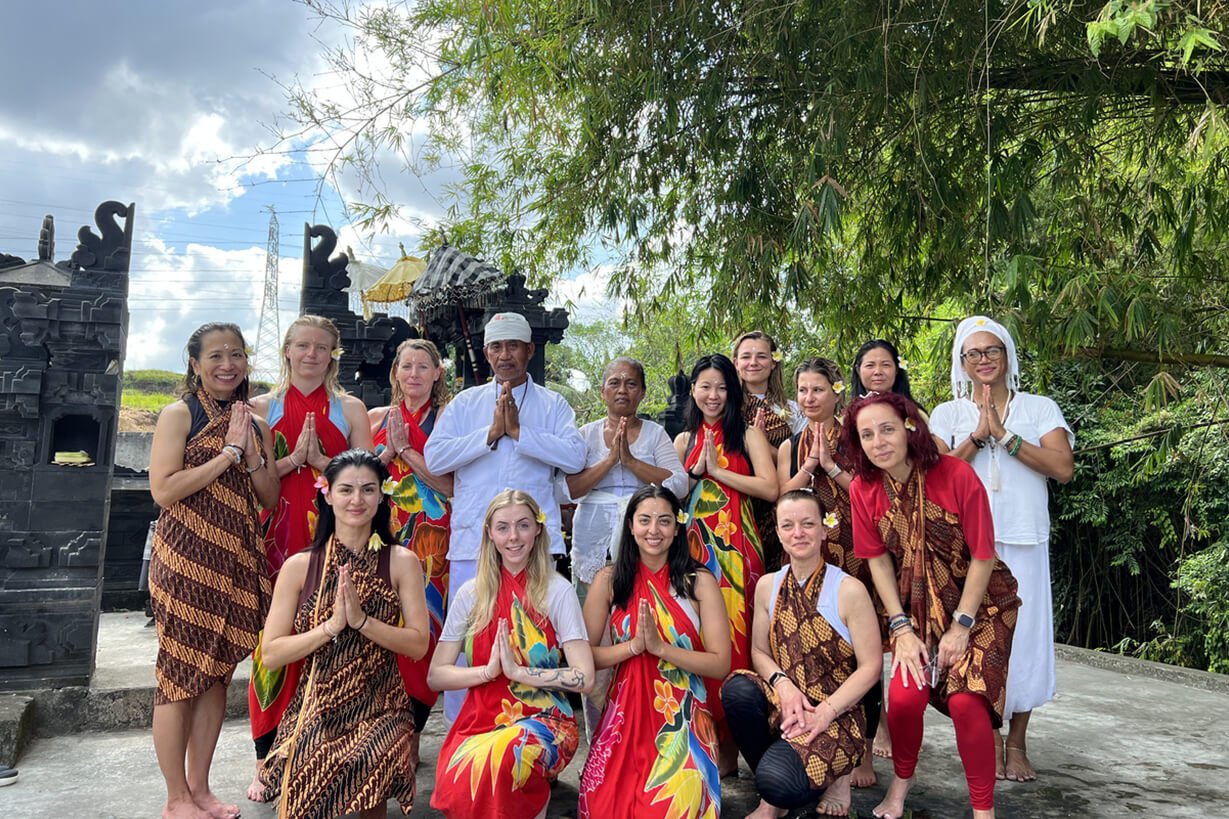
Most people use the words "vacation" and "retreat" as if they meant the same thing. Both involve leaving home, and both promise rest. But they are built for different purposes, and choosing the wrong one is a common reason people return from a trip feeling they still need a holiday.
A vacation is mostly about going somewhere. A retreat is mostly about stepping back from something. That distinction affects how you plan, what you pack, what a typical day looks like and how you feel when you get home.
This guide explains how the two differ, when each makes sense, and how a place like De Moksha in Tabanan, near Tanah Lot, can sit somewhere between them.
What Is a Vacation?
A vacation is time away from work and routine, usually focused on enjoyment, exploration or simply doing what you like.
A vacation tends to be outward-facing. You visit places, try restaurants, take photos, see landmarks, go shopping, meet people or spend long days at the beach. The itinerary is yours, and it can be packed or empty.
Vacations are good for:
Seeing a new destination
Spending time with family or friends
Celebrating something
Trying new food, activities or cultures
Doing exactly what you feel like, with no particular goal
A vacation does not need to have a purpose beyond enjoyment, and that is one of its strengths.
What Is a Retreat?
A retreat is time set apart from daily life in order to slow down, pay attention and often follow a deliberate rhythm. The word comes from the idea of withdrawing, stepping back from the usual noise, demands and routines.
A retreat tends to be inward-facing. Instead of asking "What should we see today?", you are more likely to ask "How do I want to spend this day, and how am I feeling?"
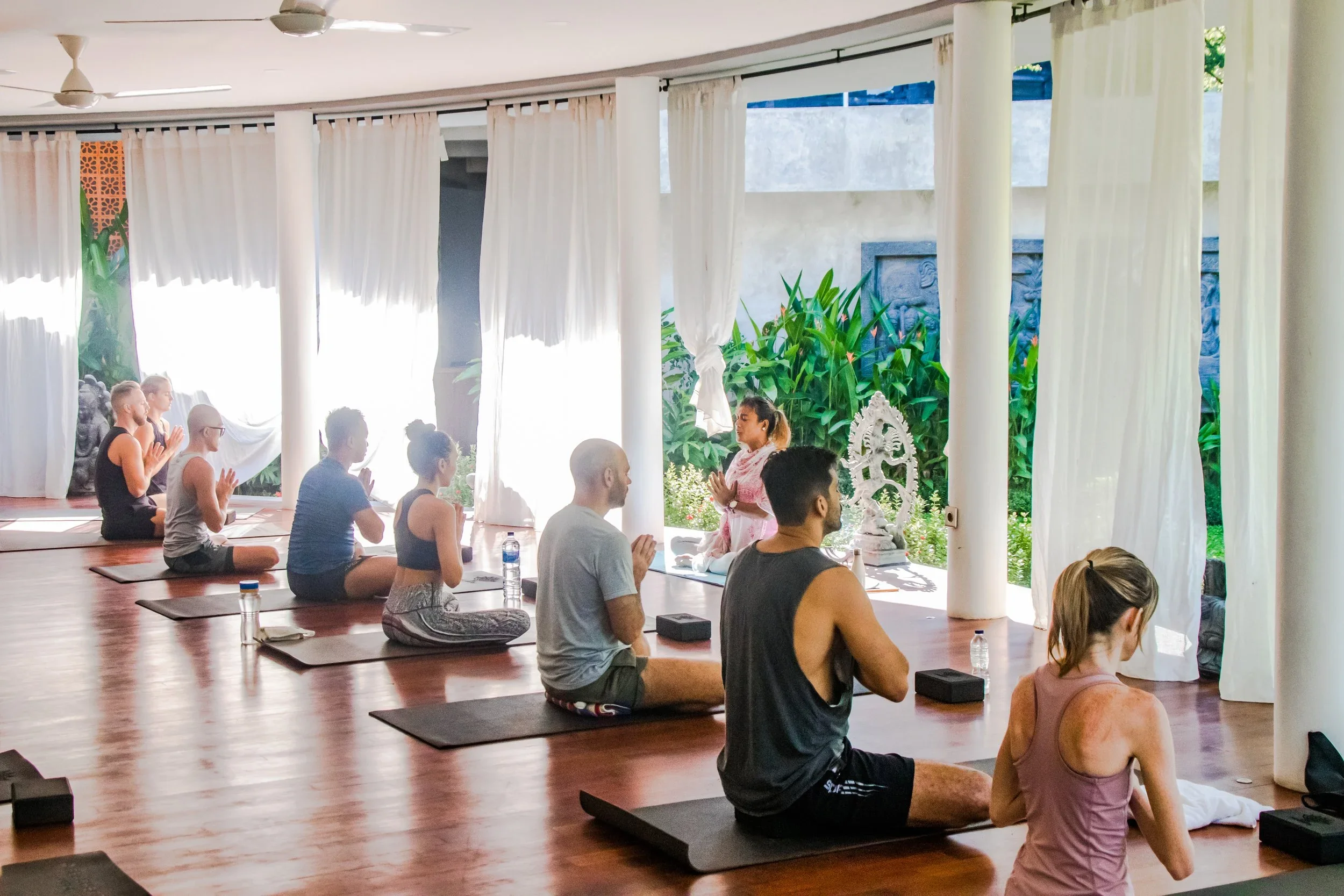
Retreats usually have a theme. That could be yoga, meditation, creativity, culture, rest or simply quiet. They often include a gentle structure, such as scheduled sessions, shared meals and time set aside for rest. The surroundings are usually chosen to support calm rather than entertainment.
A retreat is not automatically strict, silent or spiritual. Many are relaxed and beginner-friendly, and participants decide how much to take part.
Vacation vs Retreat at a Glance
Main purpose
Vacation: Enjoyment and exploration
Retreat: Rest, reflection and a deliberate pace
Focus
Vacation: Outward, on places, sights and activities
Retreat: Inward, on how you feel and what you need
Structure
Vacation: Usually self-planned
Retreat: Often a gentle schedule or rhythm
Pace
Vacation: Can be fast or slow
Retreat: Intentionally unhurried
Setting
Vacation: Often near attractions, dining and nightlife
Retreat: Often quiet, natural and removed from crowds
Typical activities
Vacation: Sightseeing, shopping, dining out, nightlife
Retreat: Yoga, meditation, workshops, nature time
Decisions
Vacation: Many, as you plan each day
Retreat: Fewer, because the rhythm is partly set
Goal
Vacation: A good time
Retreat: A reset, though not guaranteed
They suit different needs at different times.
When a Vacation Is the Right Choice
A vacation usually fits when you want variety and stimulation. If you are curious about a place, travelling with people who want different things, or you simply want freedom to wander, a traditional holiday gives you the most room.
It also suits you if:
You enjoy planning and moving between places
You want nightlife, shopping or a wide choice of restaurants close by
You feel restless when there is too little to do
You are not looking to change anything about your routines, only to enjoy a break from them
If your idea of rest is a full itinerary, there is nothing wrong with that.
When a Retreat Is the Right Choice
A retreat tends to suit people who feel tired in a way that more activity will not fix. It can also fit those who are curious about yoga or meditation, or who feel they are always switched on and want somewhere that makes slowing down easier.
You might consider a retreat if:
You want a break from constant decision-making
You like the idea of a daily rhythm someone else has organised
You would like to try yoga, meditation or other practices in a supportive setting
You want time with your own thoughts rather than a long list of things to see
You would enjoy meeting other guests through shared sessions
Retreats do not promise transformation, and a good one will not pretend to. What they offer is time, space and a structure that makes quiet easier to find.
Common Myths About Retreats
"You have to be good at yoga." Beginners attend retreats all the time. You are there to try practices, not to prove you can already do them.
"It will be silent and serious." Some retreats include silence, but many are warm, social and flexible.
"You have to follow every session." Good retreats leave room for personal time. For example, De Moksha's Yoga, Meditation & Balinese Culture Retreat includes free time and does not make scheduled activities compulsory. Check the current programme details when you book.
"It's not a real holiday." A retreat can include sightseeing, good food and time by the pool. It simply puts rest and intention at the centre.
"You'll come back as a new person." That is a lot to ask of a week away. A more realistic hope is to come back rested, with a clearer sense of what helps you slow down.
What a Retreat Day Might Look Like
Every programme is different, but a typical retreat day might be a mix like this:
A gentle morning yoga or movement session
A long, unhurried breakfast
Free time to read, swim or rest
A workshop or cultural experience in the afternoon
An evening meditation or quiet time
Dinner, then an early night
Compare this with a typical holiday day: transport, sightseeing, queues, restaurant reservations, evening plans. Both can be wonderful, but they leave you feeling quite different.
At De Moksha, retreat and cultural programmes can include things like yoga, meditation and Balinese experiences such as dance, offering-making and cooking. Activities and schedules change, so it is worth checking current availability. You can see what is currently offered on the retreats page and the De Moksha Yoga & Wellness Center page.
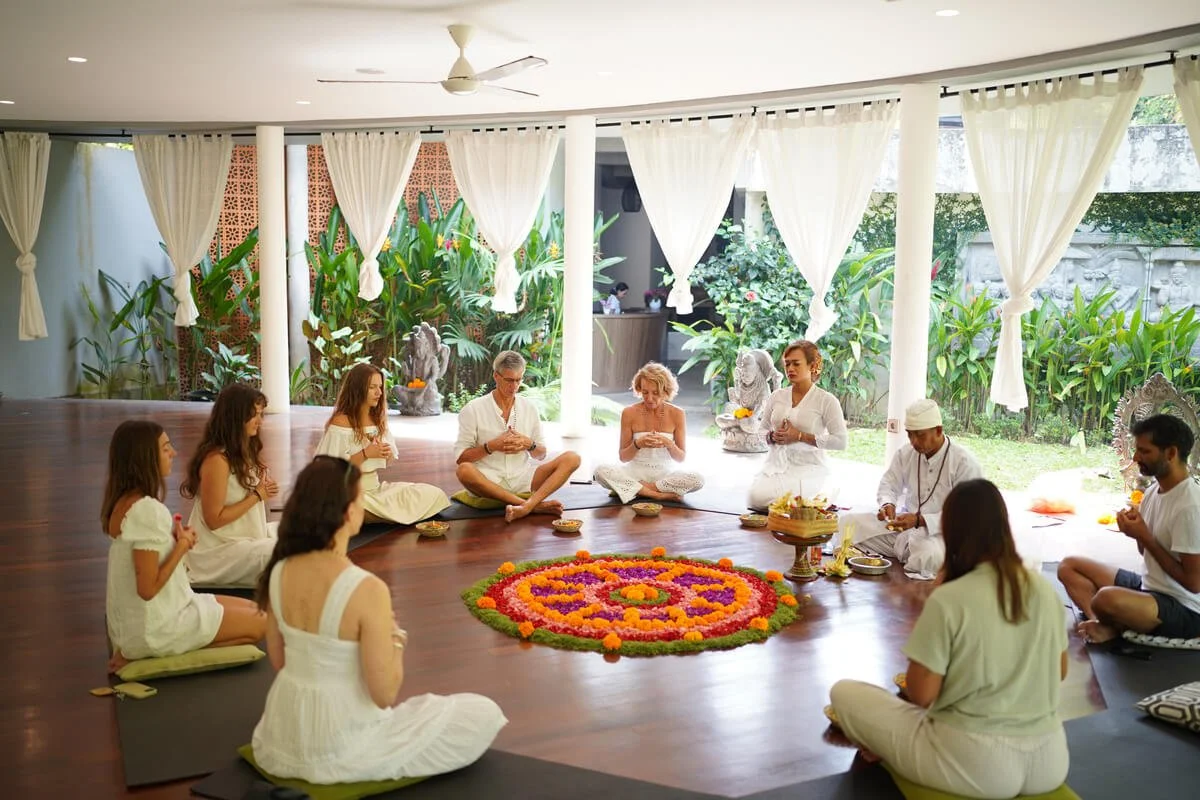
Why the Setting Matters More Than You Think
A retreat is shaped as much by where it happens as by what is scheduled. It is hard to slow down in a place that is built around noise, traffic and constant things to do.
De Moksha is in Tabanan Regency near Tanah Lot, in a quieter part of Bali with rice fields, tropical greenery and village surroundings. That kind of setting makes it easier to step out of your usual pace, since there is less pressure to be somewhere else and more reason to stay where you are.
If you want the coast, Tanah Lot is nearby, so you can still add some sightseeing to a quiet stay. This is one reason many travellers find the area appealing if they want a calmer base without being cut off from the rest of the island.
You Do Not Always Have to Choose
For many travellers, the useful question is not "vacation or retreat?" but "how much of each do I want?"
A growing number of trips fall between the two. You might spend a few days on a structured retreat and then a few days exploring Bali on your own. Or you might book a villa independently and join yoga, a spa treatment or a cultural workshop only when you feel like it.
De Moksha works as both an eco-friendly boutique resort and a retreat destination. You can:
Join a retreat programme when you want structure and shared experiences
Book a villa and design your own stay when you want freedom
Combine both by adding individual activities around your own plans
You can explore the villa collection to see the river-view, pool-access and private-pool options, or look at the wellness experiences available
How to Decide: Five Questions to Ask Yourself
What do I need most right now? If it is stimulation and novelty, lean towards a vacation. If it is quiet and routine-free rest, a retreat may fit.
Do I want to plan or be guided? Planning every day suits a holiday. Having a rhythm handed to you suits a retreat.
How do I feel about group activities? If you enjoy shared sessions, a retreat can be a good fit. If not, a villa stay with optional activities may work better.
How much do I want to do in a day? A packed day is vacation territory. A day with two or three things and plenty of space is closer to a retreat.
What do I want to feel when I get home? Excited and full of stories, or rested and unhurried? Both are valid answers.
Practical Tips for a First Retreat
Choose a length you can commit to. A few days can give a taste, and a week allows more settling in.
Lower your expectations of "results." Aim for rest and curiosity rather than a dramatic change.
Bring comfortable clothes and an open mind, but you do not need special equipment or experience.
Give yourself permission to skip things. Choosing rest over a session is part of the point.
Plan travel time carefully. Arriving tired and rushed makes it harder to settle in.
Ask questions before booking. Check what is included, how structured the days are and how much free time there is.
Frequently Asked Questions
-
A vacation focuses on enjoyment, travel and exploration, while a retreat focuses on rest, intention and stepping back from your usual routine. Retreats often include a theme, such as yoga or meditation, and a gentler daily rhythm.
-
Not exactly. A spa holiday centres on treatments and relaxation. A retreat usually adds a structure or theme, such as yoga, meditation or cultural activities, though many retreats also include spa time.
-
No. Many retreat guests are beginners. You do not need yoga or meditation experience, and you can take part at your own level. Check the programme details for any specific requirements.
-
Yes. Solo travellers often find that retreats make it easy to meet others while still keeping personal time. At De Moksha, you can also stay in a villa independently if you prefer more freedom.
-
Yes. A retreat does not mean staying in one spot the whole time. Depending on the programme, you may have time to explore nearby areas such as Tanah Lot or the surrounding Tabanan countryside.
-
There is no fixed answer. A few days can offer a short reset, while a week or longer gives more room to settle in and combine activities with free time.
-
Not necessarily. Many retreats, including De Moksha's Yoga, Meditation & Balinese Culture Retreat, include personal time and do not require participation in every session. Check current details when booking.
-
Neither is better. A vacation suits those who want variety and exploration, while a retreat suits those who want rest and a slower pace. Many travellers combine elements of both.
-
Yes. De Moksha is an eco-friendly boutique resort as well as a retreat destination, so you can book a villa independently and choose individual experiences depending on availability.
Plan Your Own Kind of Break
A vacation and a retreat are not competing ideas. They are two tools for different kinds of tiredness, curiosity and need. Knowing which one you want, or how to blend them, makes it easier to plan a trip that leaves you feeling the way you hoped.
If you want a quieter base in Bali with the option to join yoga, meditation and cultural experiences, explore De Moksha, compare the retreat programmes or browse the villas.