
You book a week away because you are tired.
Not necessarily the kind of tired that one long sleep fixes. Maybe work has been relentless. Maybe your days have become a cycle of notifications, traffic, deadlines and plans. Or maybe nothing is particularly wrong — you simply want some space from your normal routine.
That is when the idea of a wellness retreat can become appealing.
But can one week really make a difference?
Probably not in the dramatic way wellness marketing sometimes suggests. Seven days cannot promise to transform your health, erase stress or turn you into a completely different person.
What a week can give you is time.
Time to sleep without rushing. Time to move. Time to eat without multitasking. Time to be outside. Time to try yoga or meditation. Time to notice which parts of your everyday routine you miss — and which parts you do not.
At De Moksha in Tabanan, Bali, a wellness stay can combine those quieter moments with yoga, meditation, spa, Balinese culture, nature and plenty of personal time.
Here is what a week like that could realistically look like.
First, What Does “Making a Difference” Actually Mean?
A wellness retreat is not medical treatment, and it should not be presented as a guaranteed solution for stress, anxiety, sleep problems or any other health condition.
The value of stepping away for a week can be much simpler.
You have a different environment. Your usual responsibilities are temporarily reduced. Meals, activities and accommodation can be easier to organize. There may be fewer reasons to rush. And you can experiment with routines that are difficult to prioritize at home.
Some people may return feeling rested or clearer about what they want. Others may simply enjoy seven good days in Bali. Both are valid outcomes.
The useful question is not, “Will this retreat change my life?” It is, “What could I experience when I give myself a week with a different rhythm?”
Day 1: Arrive Without Trying to Achieve Anything
The first day does not need to be productive.
After traveling, the most useful thing may be checking into your villa, eating, walking around the resort and letting yourself arrive properly.
There is often pressure around wellness travel to begin immediately: meditate, set an intention, book a treatment, start becoming a better version of yourself. You do not have to.
At De Moksha, your first day can simply be about becoming familiar with the rice-field, river and tropical surroundings, settling into your villa and deciding how much structure you actually want from the week.
Day 2: Try a Different Morning
One of the easiest ways to notice a change in routine is to change how the day begins.
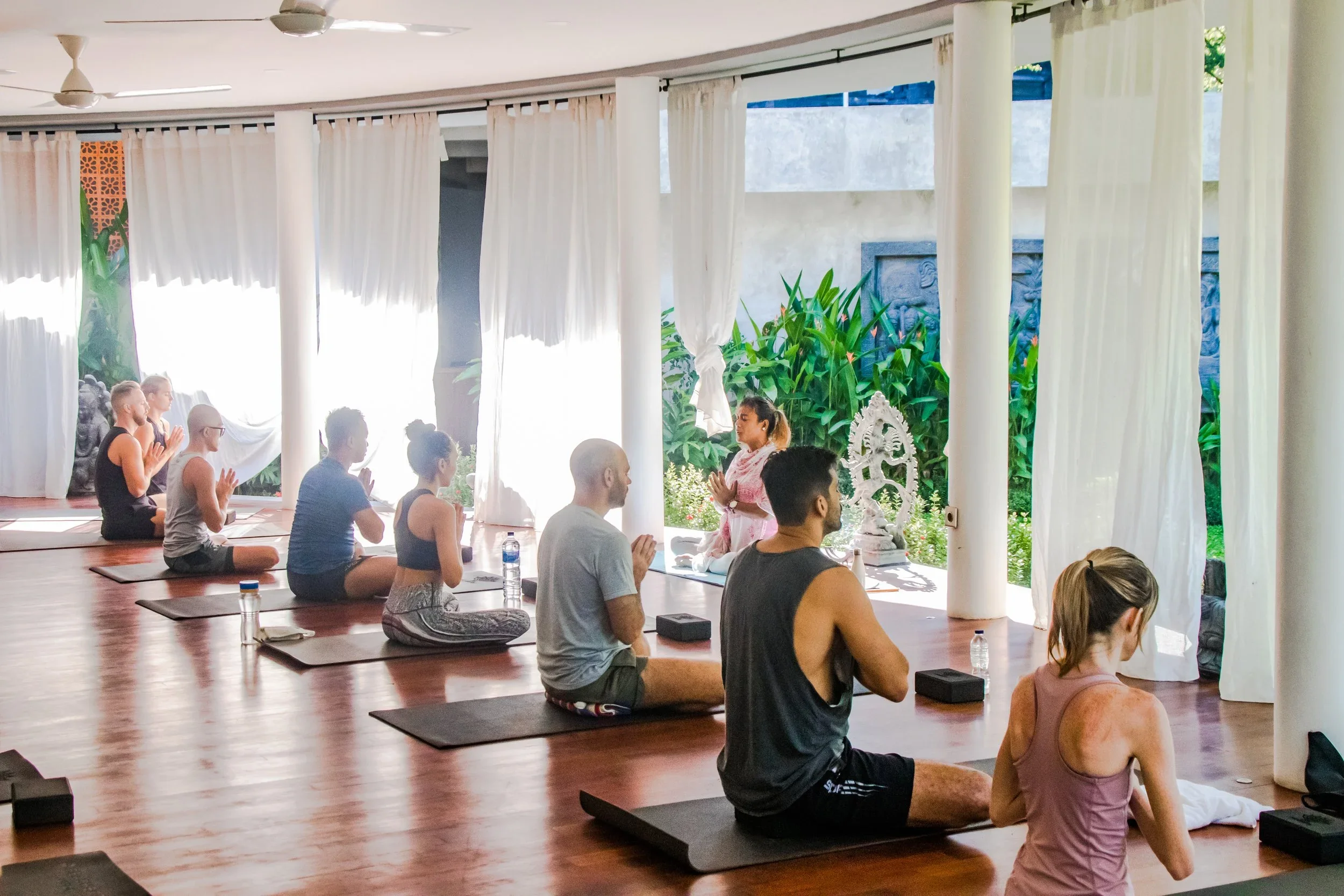
Instead of reaching for your phone and immediately entering work mode, you might begin with yoga or meditation, followed by breakfast and nowhere urgent to be.
De Moksha’s retreat programs incorporate yoga and meditation into the daily rhythm, while guests staying independently can explore current yoga and wellness offerings according to availability.
If you are a beginner, that is fine. A retreat is not a competition, and you do not need to arrive flexible, experienced or already comfortable with meditation.
First-time participants may also find our guide to a yoga retreat in Bali for beginners helpful.
Day 3: Give Your Body Some Attention
By the third day, you may want to do more — or you may want to do less.
Wellness does not have to mean an intensive schedule. It can be a yoga class, time in the pool, a spa treatment, a walk or simply an afternoon nap.
De Moksha’s spa offers massage, body and facial treatments, while the Yoga & Wellness Center gives guests another way to include movement and quiet practice in their stay.
The important part is choice. A wellness week should not become another list of tasks you feel guilty for not completing.
Explore current spa treatments and the Yoga & Wellness Center.

Day 4: Experience Bali Outside the Wellness Bubble
A retreat in Bali should still feel like being in Bali.
De Moksha’s programs can include Balinese cultural and local experiences alongside yoga and wellness. Depending on the selected program and current availability, these can include activities such as Balinese dance, cooking, traditional offering making, village experiences and visits around the Tanah Lot area.
Some programs may also include Melukat, a traditional Balinese purification ceremony conducted by a Balinese priest. It is best approached respectfully as a cultural and spiritual experience rather than as a medical or psychological treatment.
By the middle of the week, a cultural or local experience can be a useful reminder that wellness is not only something that happens inside a yoga shala or spa.
Day 5: Do Less
This might be the most important day of the week.
Do not book everything.
Have a long breakfast. Read. Sit by the pool. Spend time in your villa. Walk without needing a destination. Go to the beach if you feel like it. The coast is approximately five minutes from De Moksha, while the resort itself sits in a different landscape of rice fields, greenery and river surroundings.
Leaving space in the day can feel strange if you are used to measuring time by how much you accomplish. That is precisely why it is worth trying.
Day 6: Notice What Actually Worked for You
By now, you have had several days to try a different routine.
Maybe you loved morning yoga. Maybe meditation was more difficult than expected. Maybe the spa treatment was your favorite part. Maybe you discovered that what you needed most was simply uninterrupted sleep and an afternoon with no plans.
There is no correct answer.
A retreat can give you a temporary environment in which to notice your preferences without demanding that every activity become a permanent habit.
Day 7: Decide What — If Anything — Comes Home With You
The final day does not need to end with a promise that your life will be different from now on.
Instead, ask a smaller question: is there one part of this week that you would like to keep?
Maybe it is ten quiet minutes before checking your phone. A weekly yoga class. More time outside. Eating one meal without a screen. Leaving one evening a week unplanned.
Those choices may sound less impressive than a complete “mind and body reset.” They are also much more realistic.
Why a Week Can Feel Different From a Weekend
A weekend away can be wonderful, but it often ends just as you begin to settle in.
A full week gives you more room to move through different kinds of days. You can participate in activities without scheduling them back-to-back. You can explore Bali and still have days at the resort. You can try something new and decide you do not want to do it again.
Most importantly, there is enough time for rest to become part of the holiday rather than something squeezed between excursions.
That does not mean seven days is the scientifically “correct” amount of time for a retreat. There is no universal duration that guarantees a particular result. It simply offers more breathing room.
You Do Not Need to Join Every Activity
A retreat itinerary should support your stay, not control it.
This is particularly important for guests who are already arriving tired of schedules and obligations.
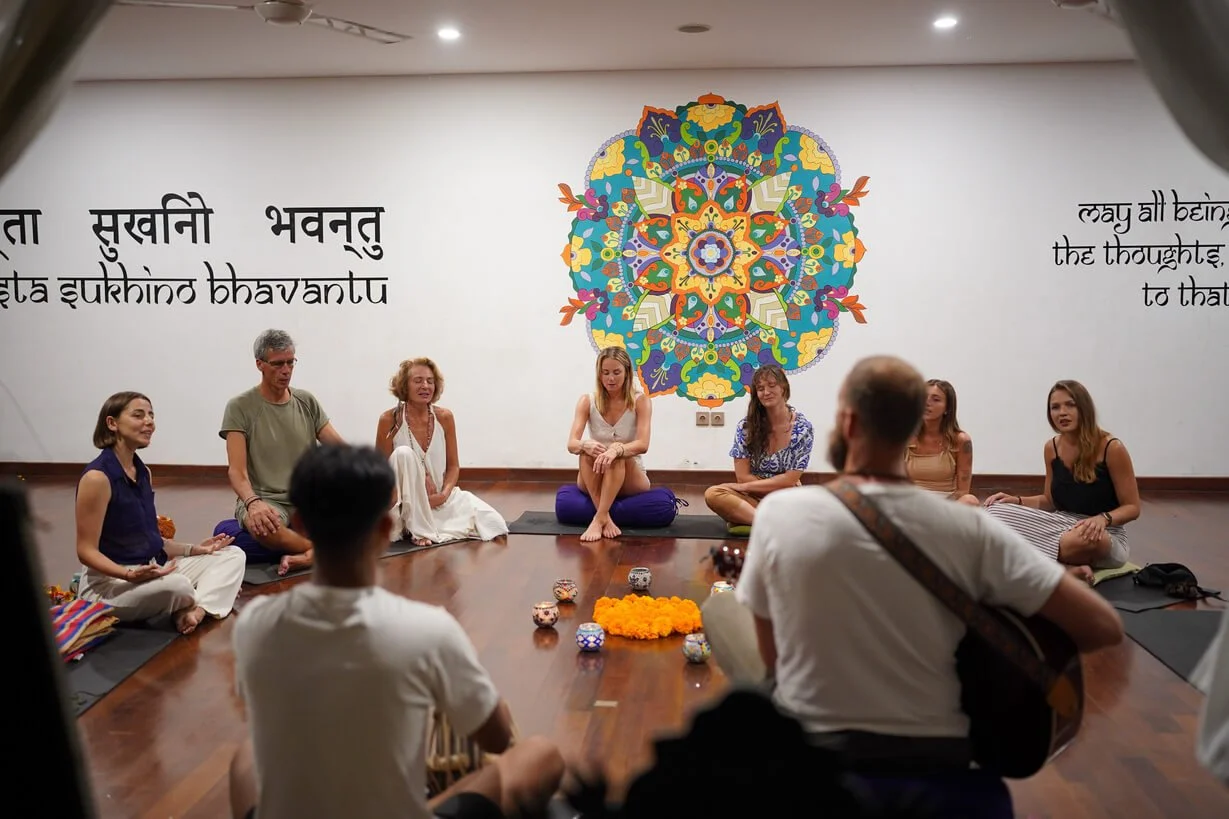
De Moksha’s Yoga, Meditation & Balinese Culture Retreat explicitly allows personal time and states that scheduled activities are not compulsory.
You can participate when an activity feels useful and take time for yourself when it does not. For many first-time retreat guests, knowing they can opt out can make the experience more approachable.
Food Can Be Part of the Slower Rhythm
During a busy week at home, meals can easily become another thing to fit between tasks.
On retreat, they can become part of the pause.
Swarga Rasa Ristorante at De Moksha uses carefully selected local ingredients and prepares meals fresh daily, with Indonesian and Balinese flavors alongside Italian-inspired dishes.
You do not need to treat every meal as “detox,” “clean eating” or medicine for it to contribute to a pleasant wellness stay. Sometimes the benefit is simply having time to sit down and enjoy it.
What a Wellness Retreat Cannot Promise
This part matters.
A wellness retreat cannot promise to cure burnout, anxiety, depression, insomnia, chronic illness or other medical or mental-health conditions. It should not replace appropriate treatment from qualified healthcare professionals.
Yoga, meditation, massage, nature, cultural experiences and time away may be enjoyable or personally meaningful, but individual experiences vary.
If you have a medical condition, are recovering from an injury, are pregnant or have concerns about particular activities or treatments, speak with an appropriate healthcare professional and inform the retreat team before participating.
So, Can One Week at a Wellness Retreat Make a Difference?
Yes — but perhaps not in the way the word “reset” suggests.
One week can give you distance from your normal routine. It can give you time to rest, explore, move, eat, experience Bali and experiment with a different pace.
It can show you which wellness practices you enjoy and which ones you do not. And it can remind you what an unscheduled afternoon feels like.
That may not be a complete transformation. It may be something more useful: a week that feels genuinely different from the one you left behind.
A Wellness Week at De Moksha
De Moksha combines boutique villa accommodation with yoga, meditation, spa, dining, Balinese cultural experiences and the natural surroundings of Tabanan near Tanah Lot.
Guests can choose a structured retreat program or create a more flexible stay around individual wellness experiences.
Your week can be quieter, more active, more cultural, more focused on yoga, or mostly about having enough time to stop rushing.
The point is not to complete the perfect wellness week. It is to make the week yours.
Compare current retreat programs or explore wellness at De Moksha.
FREQUENTLY ASKED QUESTIONS
-
One week can provide enough time to settle into a different routine, combine activities with rest and experience more than a short weekend stay. There is no universal retreat length that guarantees a particular outcome.
-
A retreat should not promise a physical or psychological “reset.” A week away can provide time for rest, movement, reflection, wellness activities and a change of routine, but individual experiences vary.
-
No. Many De Moksha retreat participants are beginners. Tell the instructor if you are new and approach the practice at a level that feels appropriate for you.
-
No. De Moksha’s current Yoga, Meditation & Balinese Culture Retreat states that scheduled activities are not compulsory and includes personal time.
-
Yes. De Moksha is also an eco-friendly boutique resort. Guests can book villa accommodation and choose selected yoga, spa, dining or cultural experiences without joining a structured retreat.
-
Depending on your chosen program and current availability, a stay can combine yoga, meditation, spa treatments, personal time, dining, Balinese cultural activities, local exploration and time at your villa or pool.
-
No. A wellness retreat is not a substitute for medical care, psychotherapy or other professional treatment. If you have health concerns, speak with a qualified healthcare professional.
-
Yes. Solo retreat travel is common. Structured activities can provide opportunities to meet others, while personal time allows you to spend parts of the stay independently.
-
There is no single expected outcome. Some guests may feel rested or enjoy the change of routine, while others may value a particular activity, cultural experience or simply the time away. Approach a retreat with curiosity rather than a promised result.